


Mentoring update November 2026
The one about endings
Please bear with me, I’ve buried the lead in this update
My last client died and I’m devastated.
When I wrapped up clinical practice almost a year ago, she was my final consult on my last day. There were many points of intersection. She lived nearby, and came from New Zealand and had ovarian cancer like me. The disease had returned way too quickly, she was heavily treated by her oncologist and needed support more than supplements. She was the one exception I made in retiring from clinic and she jumped at the chance to stay connected as needed.
Deep down I knew the therapeutic relationship would be finite. But she rallied. Despite her tumour markers rising, her metastases remained stable and she felt well enough to work and travel. But in October there were unexpected complications from treatment, and a week or so after we finally met in person for the first time, she died.
This death was 34 years after the first client of mine who’d died. In a memorable follow-up consultation the elderly gentleman mentioned out of the blue, “my leukaemia’s come back.” “What leukaemia?”, I remember thinking while surreptitiously looking back through his notes. When he’d originally consulted me a few months earlier for something benign, I’d diligently taken his full medical history. I doubt he’d deliberately left out sharing this major health event, rather just filed it away as something best forgotten. Like my final client he’d lived a memorable life, in this case an academic and much loved father.
If you’re in practice for the long haul, especially when working with people experiencing complex or life challenging conditions, there will likely be deaths. I suspect, like me, you will remember them all. Even now there are many knotty issues absent or inadequately covered in most naturopathic curricula. Death and dying, inappropriate attraction and other boundary issues to name a few.
What issues do you grapple with, and where do you seek help to work through them? While considering my next step, there are many thoughts swirling around. Such as, would you be interested in a group session in collaboration with one of our own herbalist/trainee death doulas?
Endings
“I want to retire but I’m afraid,” a colleague confessed recently. Later another practitioner shared how they’d built a shed large enough to run workshops for their non-naturopathic creative endeavours. “My third act” she said proudly.
Neither are close to Australian pension age but are old enough to start viewing the future as closer rather than far away. It’s hard to say how much the current economy is a catalyst, but many practitioners (especially in Victoria) have mentioned how slow business is at the moment. Times like this give us more time to think and sometimes question whether this is all there is.
When bookings were slow it always made me realise how much I enjoyed being a clinician. Quiet patches felt like a lost opportunity to use my skills and experience to help more people feel better.
Which brings me to mentoring. The last couple of months have been a bit quiet on that front. To some degree this is predictable when the economy wobbles. I love helping practitioners reassess how they work, help hone their skills and create a practice that truly suits them. So I’m left with the conundrum – is it time for me to take the step from semi-retirement to retirement?
The profession has changed exponentially since graduating in 1991 but there are still practitioners who quietly ask – do I have to test every patient, is it ok to concentrate more on diet and lifestyle than prescribing multiple supplements? Can we still honour the grass roots of healing in the current incarnation of naturopathy and herbalism?
Ironically, 2 hours after drafting this section of the newsletter, a practitioner in her late 50’s who I’d previously mentored emailed to ask for help to transition to retirement.
There’s more about this conundrum in my recent video if you’re interested. So I’m throwing it out to the universe again, while still unsure about how long to continue this work. For now, if you need the kind of sage support I offer please email me.
Mentoring resources
Don’t forget the mentoring resources are still live (and free), with 50 unique articles on patient management, practitioner self-care, business and some videos chatting with my herbal elders.
From the last newsletter have you tried a power hour yet. How did it go?
If it’s a quiet clinic day or you’re having a self-directed planning session, try an annual review to contemplate what went well for you over the last 12 months and how to make the coming year even better.
On a personal note
In October I went to Melbourne for the Vicherbs 36 year anniversary. The Association has come a long way from its independent roots meeting in Sue Evans and Assunta Hunter’s living rooms, to becoming an integrated part of the NHAA. It was moving to reconnect with so many colleagues who’ve been part of my naturopathic journey.
While in Melbourne I literally had a walk down memory lane with an old friend from my SSNT student days, revisiting the Victoria St campus and surrounds. The Jacka Foundation’s sale of the landmark building has been finalised, but there a few vestiges left. There were so many memories as we wandered around Fitzroy. The rooftop café with the legendary tofu balls and our favourite haunts are mostly gone but the memories are still strong.
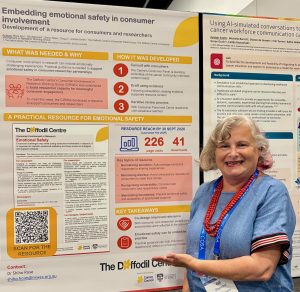
In November I presented a poster at the Clinical Oncology Society of Australia’s Annual Scientific Meeting, on Emotional Safety for Researchers and Consumers. There are a couple more oncology conferences coming up in the new year and other exciting opportunities in the wings.
If you’ve been following my semi-retirement updates, take a look at the latest episode (if you’ve already whizzed past the embedded video, scroll back up and hit play!) There’s a lot about mentoring in this one.
Retired (semi or fully or not) – once a herbalist, always a herbalist! Every morning I’ve been taking the home-grown turmeric tincture I made with Jo! It feels so different to popping a couple of curcuma caps. Connecting to the plants, making our own medicine (even once in a while) and taking them, well isn’t that what herbalism is all about?
Please feel free to stay in touch, if you have any thoughts or feedback from reading this update.
Similar Posts:


